

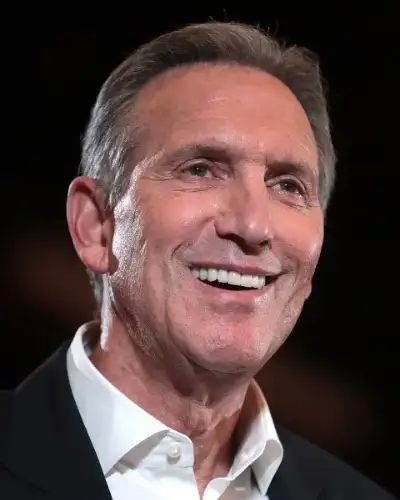
The biggest fear people bring to a Product Launch Formula launch is simple: what if nobody wants it? What if I put myself out there and people say no? Howard Schultz heard “no” more than two hundred times for one idea. Today you can buy the result on almost any street corner in the world.
This is the documented story of a kid from the Brooklyn projects, an idea his own bosses turned down, and a fundraising round that most people would have abandoned after the first twenty rejections.
Chapter 1Howard Schultz in Canarsie: the projects and a football dream
Howard Schultz was born on July 19, 1953, in Brooklyn, New York. His father, Fred, was a truck driver; his mother, Elaine, a receptionist. He grew up in the Canarsie public housing projects. Schultz has described his family as poor (some childhood neighbors remembered a more middle-class life — memory is like that).
He played football and hoped for an athletic scholarship. An injury ended that. He went to Northern Michigan University anyway and graduated in 1975 with a degree in communications.
Chapter 2Howard Schultz the salesman
His first real job was selling for Xerox in New York, from 1976. It was a sales education: cold calls, rejections, quotas. In 1979 he became general manager of the U.S. arm of Hammarplast, a Swedish housewares company.
That job brought him to a small Seattle shop that was ordering Hammarplast’s plastic coffee-filter cones. In 1981 he went to visit it. The shop was called Starbucks. It sold coffee beans, not drinks.
He fell for the place. In 1982, at 29, he joined Starbucks as director of retail operations and marketing.
Chapter 3Milan, 1983: the idea Starbucks didn’t want
In 1983 Starbucks sent Schultz on a buying trip to Milan. There he saw something American coffee didn’t have: espresso bars on every corner, full of people talking, a “third place” between home and work.
He came back convinced Starbucks should serve espresso drinks in a café setting. The founders weren’t convinced. They let him test the idea, but they decided not to roll it out further. Their business was beans.
So in 1985 Schultz left the company he loved to start his own.
His employers had the shop, the brand and the beans. He had the idea. He chose the idea.Chapter 4
Howard Schultz’s 242 meetings and 217 rejections
To open his first coffee bar, which he called Il Giornale, he needed money. He went looking for investors.
He approached 242 of them. According to his biography, 217 said no.
Think about what that means in practice. Two hundred and seventeen meetings that ended with a polite smile, a “this isn’t for us,” a doubt about whether Americans would ever pay that much for coffee. Every one of them an invitation to give up. He kept booking the next meeting.
By 1986 he had raised enough to open the first Il Giornale store.
Chapter 5Howard Schultz buys Starbucks
Two years after the first Il Giornale opened, Starbucks’ original owners decided to sell the retail business. Schultz and Il Giornale bought it for $3.8 million. The company with the beans now belonged to the man with the idea.
Starbucks went public on June 26, 1992, raising $271 million. Schultz led its expansion into a global brand, stepped back, and in January 2008 — during the financial crisis — returned as CEO to steer it through a difficult period.
What Howard Schultz’s story teaches about launching a product
Howard Schultz lesson 1: rejection is a numbers game
217 out of 242 is a rejection rate of about 90%. And it was enough. In a launch you will see similar numbers: most people on your list won’t buy. That’s normal. Jeff Walker’s Product Launch Formula is designed so that the people who are a fit raise their hand — and everyone else still gets value from your free content.
Howard Schultz lesson 2: “this is not our business” doesn’t mean “this is not a business”
His bosses weren’t wrong to protect their bean business. They were wrong about the size of his idea. When people close to you don’t “get” your course or coaching idea, that’s not proof it won’t work. Test it with the market — a small Seed Launch is the cheapest test there is.
Howard Schultz lesson 3: sell the experience, not the product
Starbucks didn’t sell coffee; it sold the place and the ritual around it. In a launch, the prelaunch videos sell the transformation — what life looks like after the problem is solved — long before anyone sees the price.
Howard Schultz lesson 4: the 25 who said yes
The 25 investors who said yes made everything possible. In launches, partners who believe in you can multiply your reach. That’s the logic of a JV launch: find a few aligned partners who say yes, and launch together.
The meeting where Howard Schultz could have quit
Somewhere around rejection number 50 — or 100, or 200 — any reasonable person would have concluded that the market had spoken. Schultz concluded he needed more meetings.
Howard Schultz has no connection to Jeff Walker, Product Launch Formula or PLF Reviews; we tell his documented story for its lesson. If you’re afraid of “no,” start where it costs nothing: register for the free Launch Masterclass.
References: where this story is documented
Every fact in this story was checked against the sources below. Quotes are short and attributed; dates and figures follow these references.

Marciano reviews Jeff Walker's public training, the book Launch and the official program pages, and keeps these guides updated. PLF Reviews is an independent affiliate site — not Jeff Walker or Internet Alchemy, Inc. How we review · Affiliate disclosure
Last updated October 11, 2026