

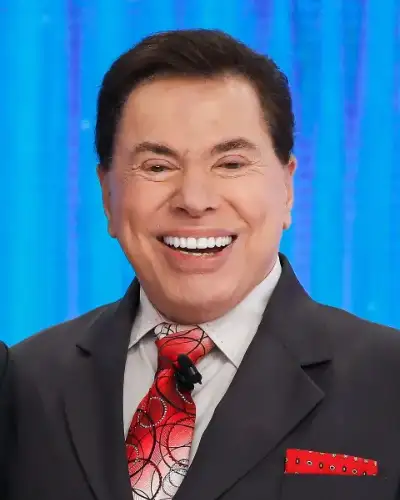
Brazil is one of the countries where the ideas behind Jeff Walker’s Product Launch Formula took off most strongly — the method became known there as “Fórmula de Lançamento.” So it seems right that one of the stories on this site comes from Brazil: the story of a boy who sold things on the streets of Rio and became the owner of a national TV network.
Brazilians know him as Silvio Santos — the smiling host who threw money into the studio audience for decades. Fewer people outside Brazil know how far he came.
Chapter 1Silvio Santos’ beginnings: Senor Abravanel of Lapa
He was born Senor Abravanel on 12 December 1930 in Lapa, a neighborhood of Rio de Janeiro. He was the eldest son of Alberto Abravanel and Rebeca Caro, Sephardic Jewish immigrants who had arrived in Brazil in 1924.
It was not a wealthy childhood. And at 14 the boy went to work in one of the toughest schools of business there is: the street.
Chapter 2Silvio Santos the camelô: selling on the streets of Rio
At 14 he became a camelô — a street vendor. He sold plastic cases for voter registration cards to people passing by in downtown Rio. Street selling is a hard school: you have a few seconds to stop a stranger, get his attention, show the product and close the sale before he walks on.
He also had a voice. He tried out at a radio station, Rádio Guanabara, and got in. Then he did something that says everything about him: after a month, he quit. The street paid more.
He left radio because selling on the sidewalk earned more. He would come back to broadcasting — on his own terms.Chapter 3
Silvio Santos on radio, a ferry and a salesman’s imagination
Over the next years he worked as an announcer at several radio stations — Rádio Mauá, Rádio Tupi and Rádio Continental in Niterói. He also came up with a business that only a born salesman would invent: on the ferry between Rio and Niterói, he played music and commercials for the passengers. A captive audience for the length of the crossing.
He was learning two things at once: how to entertain people and how to sell to them. Most people think those are opposites. He discovered they are the same skill.
Chapter 4Silvio Santos and the Baú da Felicidade: rescuing a failing business
The turning point came through a business that was in trouble. The Baú da Felicidade (“Chest of Happiness”) sold Christmas toy chests that customers paid for in small monthly installments. It was struggling financially, and its owner, the radio and TV personality Manuel de Nóbrega, transferred it to Silvio Santos.
Silvio turned it into a success. He later partnered with the toy company Estrela. The installment model — paying a little each month toward a promised reward — became the financial engine behind everything that followed.
Chapter 5Silvio Santos goes from a game show to a network
In the early 1960s he hosted a game show, Vamos Brincar de Forca, on TV Paulista. In 1963 he began Programa Silvio Santos, the show that would run for decades and make his face one of the most recognized in Brazil.
He didn’t want to be only a host on someone else’s channel. In December 1975 he won the concession for a TV channel in Rio; his station, TVS, went on air on 14 May 1976. In 1981 his group took over signals from the defunct Rede Tupi. The São Paulo station signed on on 19 August 1981, and together with TVS it formed SBT — Sistema Brasileiro de Televisão — aimed squarely at working-class and lower-middle-class viewers, the people he had sold to all his life.
He built a conglomerate, Grupo Silvio Santos, with media and real estate businesses. He died on 17 August 2024, aged 93, widely regarded as the greatest personality in the history of Brazilian television.
What Silvio Santos’ story teaches about launching a product
Silvio Santos lesson 1: entertainment and selling are the same skill
Silvio held the attention of millions because he made them feel something — laughter, suspense, hope — and then made an offer. Jeff Walker’s Product Launch Formula uses the same principle in its prelaunch content: teach, tell stories and create anticipation, so that when the offer comes, people are already engaged. Our guide to mental triggers — anticipation, community, events — reads like a description of a Sunday afternoon with Silvio Santos.
Silvio Santos lesson 2: rescue the asset nobody believes in
The Baú da Felicidade was failing when it reached him. He saw value others didn’t. Many experts have an old course, a forgotten ebook or a membership that “didn’t work.” Relaunched with a real launch sequence, an old offer can become new.
Silvio Santos lesson 3: know exactly who you serve
SBT was built for a specific audience — the working families Silvio had known on the street. The most effective launches speak to one clearly defined person. In Brazil, entrepreneur Erico Rocha adapted Jeff Walker’s method into a Portuguese version; read the story in our Fórmula de Lançamento guide.
Silvio Santos lesson 4: own the channel
He started on other people’s stations and ended up owning the network. For an online business, “owning the channel” means having your own list and your own audience instead of depending only on a platform’s algorithm.
The moment Silvio Santos could have stayed small
He could have stayed a successful street vendor. He could have stayed a radio announcer. He could have stayed a host on someone else’s channel. Each time, he took a bigger risk and built a bigger stage.
Silvio Santos has no connection to Jeff Walker, Product Launch Formula or PLF Reviews. We tell his documented story because it is one of the great sales stories of Brazil. If it inspired you, start small this week: register for the free Launch Masterclass.
References: where this story is documented
Every fact in this story was checked against the sources below. Quotes are short and attributed; dates and figures follow these references.

Marciano reviews Jeff Walker's public training, the book Launch and the official program pages, and keeps these guides updated. PLF Reviews is an independent affiliate site — not Jeff Walker or Internet Alchemy, Inc. How we review · Affiliate disclosure
Last updated October 11, 2026