

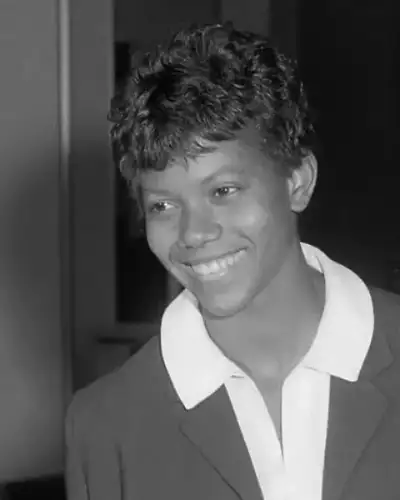
A launch built with the Product Launch Formula looks fast from the outside: a week of videos, a few days of open cart, a burst of sales. What you don’t see is the slow, repetitive work that came before. Wilma Rudolph’s sprint to Olympic gold took about eleven seconds. The work behind it took most of her childhood.
Chapter 1Wilma Rudolph’s birth: the 20th of 22 children
Wilma Rudolph was born prematurely on June 23, 1940, in Saint Bethlehem, Tennessee. She was the 20th of her father’s 22 children. The family was poor, in the segregated American South, where medical care for Black families was limited.
As a small child she had pneumonia and scarlet fever. Then, at about five years old, she contracted polio. She survived, but the disease left her left leg and foot weak. She wore a metal leg brace.
Chapter 2Wilma Rudolph: fifty miles for treatment
For treatment, her mother took her to Meharry Medical College in Nashville — about 50 miles from home — again and again.
At home the family joined in, giving her weak leg massages every day. It was dull, repetitive, unglamorous work, done for a child who might never walk normally.
No crowd watched those massages. No medal was promised. A family just showed up, every day, for one little girl.
By the age of 12, Wilma had stopped wearing the brace.
Chapter 3Wilma Rudolph discovers basketball — and speed
Free of the brace, she threw herself into sports. At Burt High School she played basketball and, in her sophomore year, scored 803 points — a new girls’ high school record. Her high school coach gave her a nickname that stuck: “Skeeter.”
Ed Temple, the women’s track coach at Tennessee State University, saw her and invited her to his training program. The girl who had worn a leg brace was now training with one of the best track programs in the country.
Chapter 4Wilma Rudolph’s first Olympics at 16
In 1956, at just 16, she was the youngest member of the U.S. track team at the Olympic Games in Melbourne, Australia. She ran the third leg of the 4×100 m relay, and the team won bronze.
Not gold. Bronze. She went home and kept training for four more years.
Chapter 5Rome, 1960: Wilma Rudolph, the fastest woman in the world
At the 1960 Olympics in Rome, Wilma Rudolph won the 100 meters. Then the 200 meters. Then, with the 4×100 m relay team, a third gold. She became the first American woman to win three gold medals at a single Olympic Games and was hailed as the fastest woman in the world.
She retired from competition in 1962, still young, and became a teacher and coach. In 1981 she founded the Wilma Rudolph Foundation to train young athletes. She died of cancer on November 12, 1994, at 54.
What Wilma Rudolph’s story teaches about launching a product
Wilma Rudolph lesson 1: the boring work is the real work
Daily massages and long drives to Nashville built the legs that won in Rome. In launching, the “massages” are things like writing to your list every week, answering questions, improving one email at a time. Jeff Walker’s Product Launch Formula gives that daily work a direction, so that it builds toward launch day.
Wilma Rudolph lesson 2: bronze first, gold later
At her first Olympics she won bronze in a relay. Four years later she won three golds. Most launchers’ first launch is a “bronze.” The Launch Conga Line idea — one launch after another, each building on the last — is the four-year plan between Melbourne and Rome.
Wilma Rudolph lesson 3: find your coach
Ed Temple turned raw speed into Olympic results. A good method and a good teacher shorten the road. That is the honest case for structured training like Product Launch Formula: not magic, but a proven sequence and someone who has done it many times.
Wilma Rudolph lesson 4: the people behind you count
Her mother’s trips to Nashville and her family’s daily massages were part of every medal. When you launch, thank the people who carried you — and let your audience see them. Gratitude is part of a good story.
The years Wilma Rudolph could have accepted “less”
It would have been understandable to accept that a child with polio, in a poor family, would never run. Her family refused to accept it, one massage at a time — and then she refused to accept a bronze as her final result.
Wilma Rudolph has no connection to Jeff Walker, Product Launch Formula or PLF Reviews; we tell her documented story for the lesson. Start your own training this week: register for the free Launch Masterclass.
References: where this story is documented
Every fact in this story was checked against the sources below. Quotes are short and attributed; dates and figures follow these references.

Marciano reviews Jeff Walker's public training, the book Launch and the official program pages, and keeps these guides updated. PLF Reviews is an independent affiliate site — not Jeff Walker or Internet Alchemy, Inc. How we review · Affiliate disclosure
Last updated October 11, 2026